The biggest supply chain risk is not always disruption. Sometimes, it is dependency.
A trade lane can work well for years – until too much of your business depends on it.
Freight is moving. Demand is steady. The route feels familiar. Then conditions shift. A tariff changes, costs rise, a port delay affects timing or regulations tighten, and the pressure quickly moves beyond logistics.
What looked like an efficient freight model starts affecting margin, service and continuity.
At BR International, we have seen this happen when businesses build too much volume into one market, one route or one established way of moving goods. The issue is not disruption on its own. It is having too little room to move when disruption hits.
If your business is relying heavily on one trade lane, this is the point to ask whether it still gives you enough flexibility to protect performance if conditions change.
In this article, we look at where trade lane risk tends to build, what you should review before expanding, and how diversification can strengthen both growth and supply chain resilience.
Why relying on one trade lane increases supply chain risk
Most exporters understand that some level of disruption comes with global trade.
The greater risk often sits in how much exposure has built up around one market, one region or one freight pattern.
If too much volume depends on a single trade lane, even a manageable shift can create outsized consequences. A new tariff can erode margin faster than expected. A currency movement can tighten profitability. A regulatory change can slow movement through the lane before your team has time to adjust. People who should be focused on growth end up spending their time protecting continuity.
That concentration risk matters even more in a trade environment that is already becoming less fixed. McKinsey Global Institute modelling suggests that, depending on the scenario, more than 30 percent of global trade in 2035 could shift from one corridor to another, with fragmentation and higher tariffs driving some of the biggest changes.
For Australian businesses, that is a useful reminder that over-reliance on one trade lane is not just an operational vulnerability. It can quickly become a strategic one. It can also affect enterprise value. Businesses that are diversified across markets, suppliers and trade lanes are often better placed to protect earnings, reduce risk concentration and build stronger long-term business value.
So, when should Australian businesses review trade lane concentration?
One of the clearest signs is when the same trade lane is doing too many jobs at once.
It is supporting revenue, holding service expectations together and carrying the weight of future growth. That can work for a time. But once external conditions move, your business may be forced to adapt under pressure rather than through planning.
A stronger approach is to review trade lane exposure before that happens.
That does not mean walking away from existing markets or replacing what is working. It means asking a harder question: if this lane became more volatile, more expensive or less reliable, how much room would your business really have to respond?
What to review before expanding into new trade lanes
1. Market concentration risk
Start with the most basic question: where is your business too reliant on one market or region?
If a meaningful share of revenue depends on one trade lane remaining stable, that deserves attention. The issue is not only whether that lane is performing today. It is how exposed the business would be if conditions changed quickly.
2. Margin pressure across current freight lanes
Some trade lanes carry more hidden cost risk than others.
You may still be moving volume efficiently, but the margin profile may already be tightening due to freight costs, tariffs, currency movements or compliance pressure. If profitability depends on one lane staying commercially favourable, that is not just a pricing issue. It is a structural one.
3. Shipping route resilience and port reliability
Not every lane is equally dependable once disruption enters the picture.
A proper review should go beyond transit time and freight cost. It should also consider route stability, port reliability, handover risk and how easily freight can be redirected if conditions tighten. A route that works well in a steady quarter may behave very differently in a volatile one.
4. Export compliance requirements in new markets
A new market is not just a sales opportunity. It is a different operating environment.
Before expanding into a second or third trade lane, you need to understand what compliance will demand. Product requirements, documentation, customs treatment and local expectations all shape how smoothly that market can be entered.
5. Supplier and vendor management structure
Trade lane diversification only creates value if the supporting supplier structure can support it.
That means reviewing whether you have the right vendor relationships, enough sourcing flexibility and enough visibility across supplier performance to manage added complexity without losing control.
6. Supply chain visibility across multiple trade lanes
As the network expands, visibility becomes more important, not less.
If your business is growing beyond one trade lane, you need a clearer view across orders, suppliers, freight movement and risk points. Without that, issues take longer to identify and longer to act on. More markets then create more noise instead of more resilience.
That is why BRi places so much emphasis on visibility. The value is not just in tracking movement. It is in helping businesses make decisions earlier, while there is still room to move.
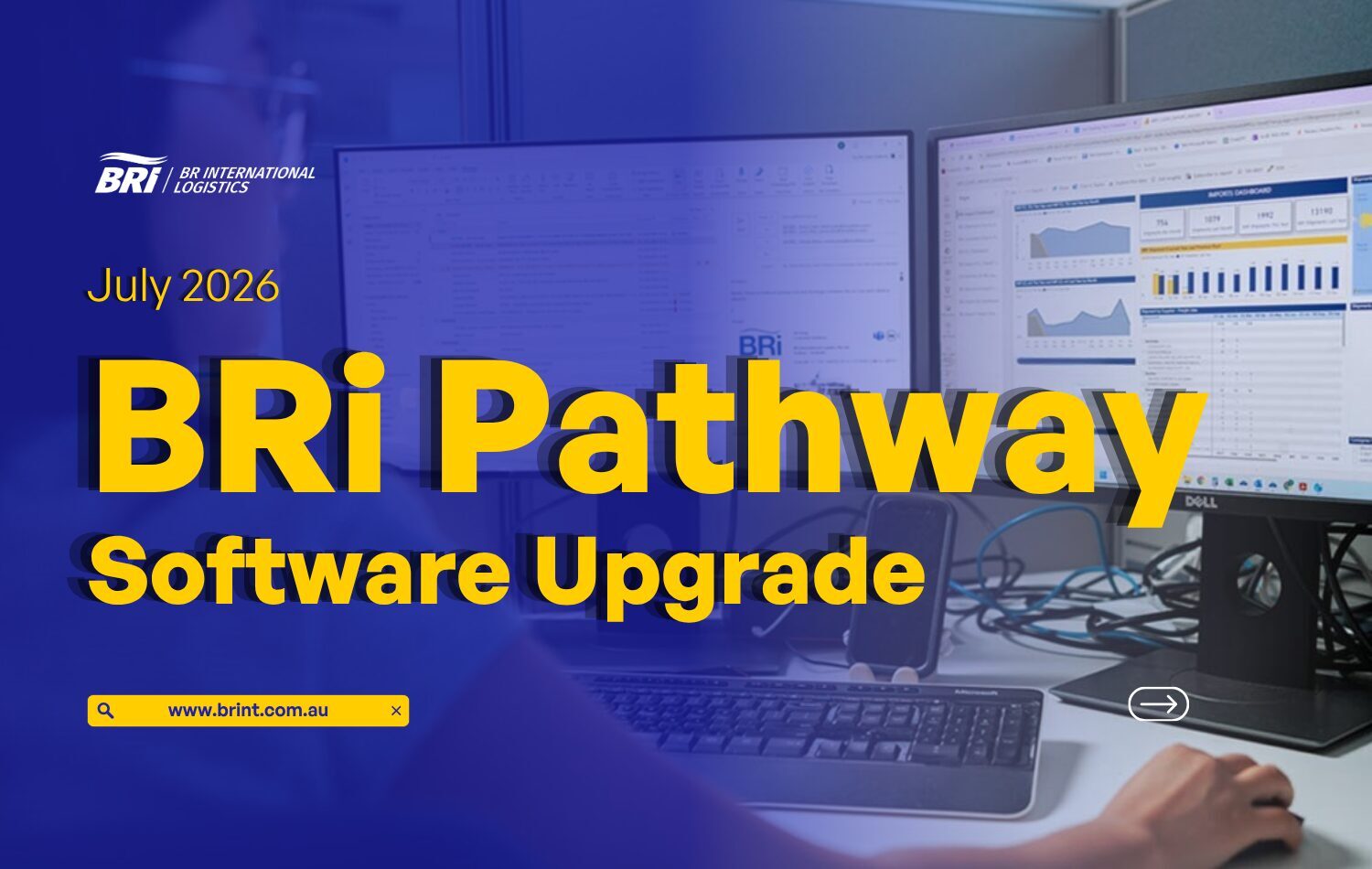
That thinking also sits behind PATHWAY, our proprietary platform, which is designed to give clients clearer visibility across the supply chain and turn fragmented updates into practical insight.
As Michael Bourne, Director of BRi Logistics, says: “Good data gives businesses the ability to act earlier.”
Why new trade lanes can reduce logistics risk
As Aaron Poole, Co-founder and Director of BR International, has said, the strongest businesses are rarely dependent on a single market. They keep building options and flexibility before they need them.
That matters.
Periods of disruption often narrow attention too much. Businesses focus on protecting the markets they already know, even when those markets are becoming more volatile or less attractive commercially. At the same time, other regions may be building trade relationships and looking for the quality, reliability and compliance that Australian exporters can deliver.
There is current evidence of that shift, including:
- Europe: Australia’s negotiations on the EU free trade agreement concluded on 24 March 2026, and DFAT says 97.8% of Australia’s goods exports will enter the EU duty-free once it comes into force.
- India: the Australia–India Economic Cooperation and Trade Agreement continues to strengthen market access and support broader trade diversification across goods and services.
- Vietnam: Vietnam remains an increasingly relevant market in regional diversification discussions, supported by strong trade growth and deepening bilateral ties with Australia.
- The Middle East: the region remains strategically important for businesses reviewing future market pathways and distribution options as trade settings continue to evolve.
That does not mean every exporter should suddenly enter a new region. But resilience often comes from widening your field of view before the market forces the decision for you.
Three questions every executive should ask
At a certain point, trade lane strategy stops being just an operational issue and becomes a leadership one.
A few questions usually make that clear:
- If your primary trade lane became 20% more expensive tomorrow, what would you do?
- If your largest export market slowed, where would future growth come from?
- Do you have enough visibility and control across your supply chain to respond quickly?
These are the kinds of questions that move trade lane strategy out of the logistics team and into broader business planning.
Trade lane diversification example
We have seen this firsthand with a food and beverage exporter that had built most of its export volume into East Asia.
When new tariffs and currency swings hit, margin came under pressure almost overnight. Instead of waiting for conditions to settle, we helped the business test South Africa and Poland through trial shipments and new distribution introductions. Within months, around 30% of its exports were moving into those newer markets.
That is what trade lane resilience looks like in practice.
Not a complete overhaul, and not a rushed move away from one market. A measured decision to reduce concentration, test new pathways and build a more balanced export structure before more value was lost.
But expanding beyond one lane only creates value if the business can still manage the added complexity. As Peter Simonett, former COO of Arisit, noted, once supply was spread across multiple vendors and origin points, visibility became critical. BRi had worked with him and his team to bring that complexity into a clearer structure, with full transparency across the order and delivery cycle.
That kind of control becomes more important as businesses grow beyond one market, one supplier base or one freight pattern.
How to build a more resilient export strategy
The strongest supply chains are not always the simplest. They are the ones with enough flexibility to adapt without losing control.
That may mean introducing multi-region sourcing. It may mean reassessing where volume sits. It may mean strengthening vendor management or reviewing whether freight can move through different pathways. The right answer will depend on your business, your markets and where current exposure sits.
The more important question is whether you have more than one workable option when conditions shift.
That is the difference between reacting to disruption and being positioned to move through it.
Final thought: trade lane strategy should support growth, not limit it
Growing beyond one trade lane is not just a market expansion decision.
It is a supply chain decision, a margin decision and increasingly a resilience decision.
The businesses that handle volatility best are rarely the ones waiting for the current lane to become unworkable. They are the ones reviewing concentration risk earlier, building options sooner and creating enough flexibility to shift before pressure becomes more expensive.
If your business is overly dependent on one market, one supplier base or one trade lane, now is the time to ask what that exposure could cost you – and what alternatives are worth building before you need them. BR International helps businesses assess trade lane risk, strengthen supply chain visibility and create more resilient pathways into new and existing markets.
If that is a conversation your business needs to have, speak with the BRi team.