Peak season does not start when Black Friday arrives. For Australian importers, the pressure begins much earlier, when decisions around inventory, suppliers, freight capacity and distribution start locking in what the business will be able to deliver later in the year.
In 2026, Black Friday falls on 27 November and Cyber Monday on 30 November. Australia Post’s 2026 eCommerce Sale Event Calendar identifies Cyber Weekend and pre-Christmas sales among the major online sales events in the second half of the year, with 73% of Australian shoppers waiting for sales events before buying.
The scale of online demand remains significant. According to the Australia Post eCommerce Report 2026, Australians spent $82.6 billion online in 2025, up 14% year on year, with online purchases accounting for 24% of total retail spending. Australian households are also shopping more frequently and across more retailers, while smaller basket sizes point to increasingly value-conscious purchasing behaviour.
At the same time, the broader retail outlook remains measured. Deloitte Access Economics forecasts Australian retail turnover growth of 1.8% in 2026, down from 2.3% in 2025, against a backdrop of weaker demand and continued cost pressure.

For importers, that creates a familiar tension.
You need enough stock to capture demand, but not so much that working capital is tied up into the new year. You need freight capacity secured early, but enough flexibility to respond if suppliers or demand change. And you need confidence that inventory will arrive when the commercial window is still open.
That is why peak season planning is less about preparing for one busy month and more about understanding where your supply chain could lose control as pressure builds.
We created a checklist to help you look at the areas worth reviewing now, and how that work should progress from August through to December.
How should importers prepare their inventory for peak season?
Inventory is usually the first place peak season pressure becomes visible. Too little stock can mean missed sales, lost shelf space or disappointed customers. Too much can leave cash sitting in warehouses long after the sales period has passed. Inventory level is important, but how much confidence do you have in the supply chain behind it?

1. Work backwards from the commercial deadline
If stock needs to be available for Black Friday, the required delivery date should drive the plan. That means accounting for production, origin handling, international freight, customs clearance, domestic transport and warehouse receiving before the product is actually ready to sell.
Standard transit time is only part of the picture. If one of those steps slips, how much buffer remains before the commercial outcome is affected? For products tied to important retail windows or customer commitments, that margin can become very small very quickly.
2. Know which stock carries the greatest commercial risk
Not every SKU needs the same level of protection. Some products carry more margin. Some support major campaigns. Others are tied to important wholesale or retail commitments.
Those are the lines that should influence freight priorities, supplier follow-up and inventory allocation first. This is where logistics becomes a commercial decision rather than simply an operational one.
3. Look closely at supplier concentration
A supplier can be reliable and still represent risk. If a large percentage of peak inventory depends on one vendor, one origin or one production site, the business has limited room to respond when something changes.
We have seen this with clients whose supply chains worked well under normal conditions but became exposed when disruption occurred. One client relied heavily on a single Asian supplier and centralised distribution model. A delay at origin could quickly affect product availability because there was no meaningful alternative behind it. Over time, we helped introduce suppliers across Vietnam, South Africa and Poland, reducing the amount of volume dependent on one source.
The point was not diversification for its own sake. It was to create options before the business needed them.
How can importers optimise customer experience and sales channels?
Peak season logistics eventually shows up in front of the customer. A strong promotion means very little if the product is unavailable, arrives late or cannot be fulfilled through the channel where demand is occurring.
For importers selling across retail, wholesale and eCommerce, the supply chain therefore needs to reflect how customers are actually expected to buy during peak.

1. Put stock where demand is likely to occur
If eCommerce is expected to carry more volume, fulfillment capacity and inventory positioning need to support that.
If a retail customer has a major promotional window, those orders may need to be prioritised earlier in the freight plan.
If the stock is in Australia, that’s great. But is it in the right place, at the right time, with enough capacity behind it to reach the customer?
2. Keep sales promises aligned with logistics reality
Peak season often creates pressure between commercial ambition and operational capacity.
Sales teams want to maximise the window, customers want shorter delivery times, then warehouses and carriers are dealing with higher volumes. That makes internal alignment important. Promotional dates, customer cut-offs, stock availability and delivery expectations should be based on what the network can reliably support, not on an ideal-case transit time.
The cost of getting that wrong is rarely contained within logistics. It tends to show up through customer service, cancelled orders, retailer pressure or lost repeat business.
3. Plan for a longer peak period
Peak demand is no longer concentrated in December. Black Friday and Cyber Monday have pulled Christmas purchasing forward, while extended promotional periods mean many businesses now experience sustained pressure across November and December.
For importers, that changes the timing of inventory decisions. Stock that arrives in late November may technically be available before Christmas, but it may already have missed a significant part of the commercial opportunity.
What are the best logistics strategies for peak season?
There is no single peak season freight strategy that works for every importer. The right approach depends on the product, supplier network, customer commitments, lead times and the commercial consequence of a delay. What does remain consistent is the need for more flexibility as pressure increases.

1. Secure critical capacity before the market becomes tight
Once peak volumes are reasonably clear, critical freight should be identified early.
That does not mean locking every shipment into one plan months in advance. It means understanding which orders have very little room to move and ensuring capacity decisions reflect their commercial importance.
The cheapest freight option can become expensive very quickly if the product misses the period when it was meant to sell.
2. Build alternatives before disruption forces the decision
Peak season is not the time to work out what Plan B looks like. For important product lines, importers should already understand whether another sailing, route, mode, supplier or distribution option is viable.
This is one of the clearest markers of supply chain resilience. The objective is to avoid a situation where one disruption leaves the business with no practical response.
3. Review the distribution model, not just the international freight leg
A container arriving on time does not guarantee the product reaches the customer on time. During peak, congestion can simply move from international freight into warehousing and domestic distribution.
For the BRi client mentioned earlier, this became another part of the solution. Rather than sending every high-volume product through one central distribution centre, selected lines were moved through a direct-to-store model where it made commercial and operational sense. That reduced handling, shortened lead times and improved product availability through peak.
4. Use visibility to act earlier
Visibility has limited value if it only confirms that something has already gone wrong. What matters during peak is whether the business can see risk developing early enough to respond. That may mean knowing that a supplier has not confirmed production, a document is missing, a milestone has slipped or an order is beginning to move outside tolerance.
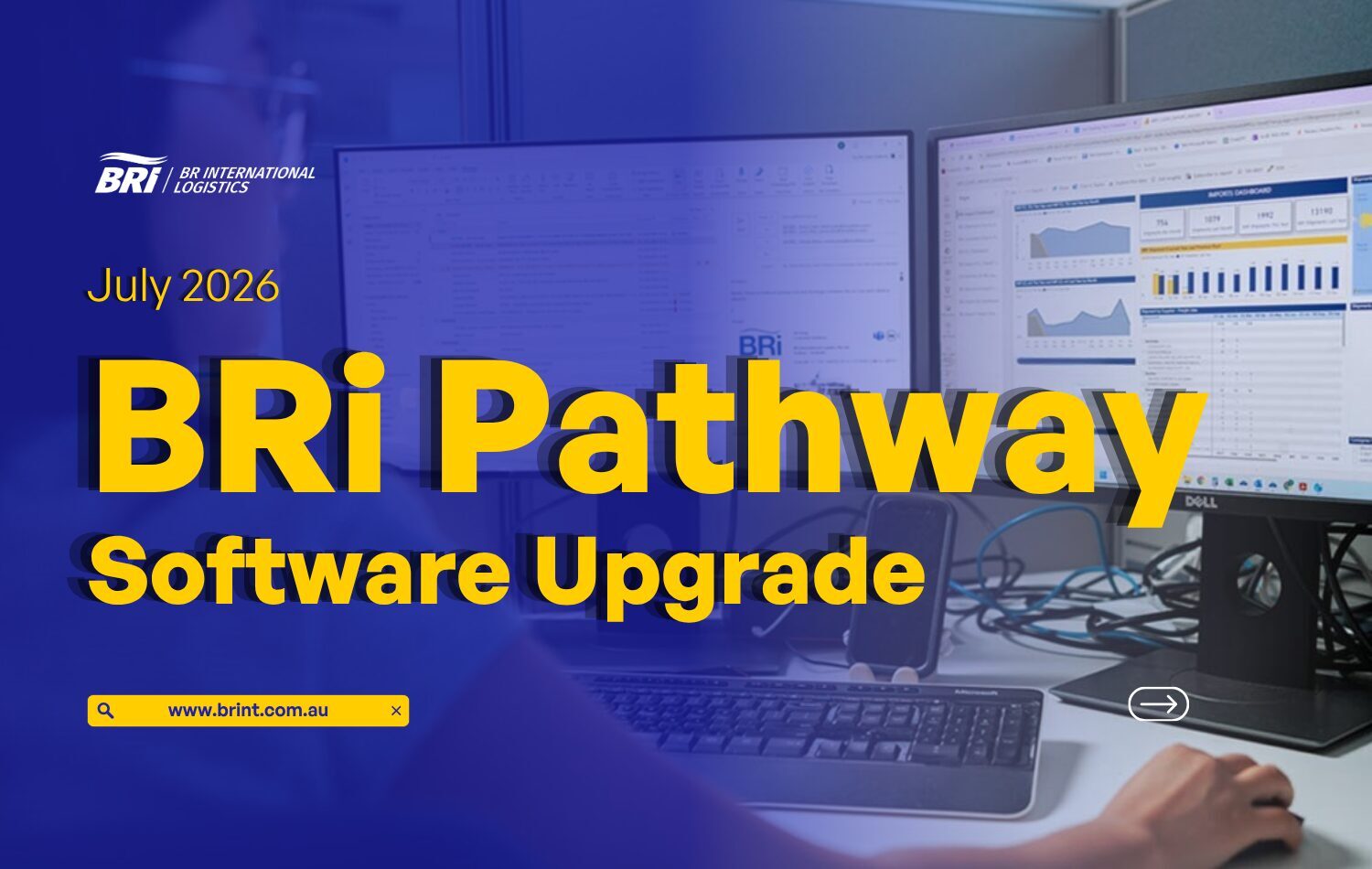
BRi’s PATHWAY platform is designed around that principle. It brings supplier activity, order information, documents, freight milestones and exception reporting into one environment so teams can focus on what requires attention rather than manually chasing every movement.
Why single-platform multi-vendor management matters more than ever this peak season
Supplier diversification is often discussed as a resilience strategy, but adding more vendors can create its own operational burden.
More suppliers mean more production schedules, more documentation, more status updates and more people to coordinate. Without the right structure, a business can reduce concentration risk while increasing administrative complexity.
That is why multi-vendor management becomes more important as the supplier base grows.
For importers, the objective should be to create one clearer view across multiple vendors rather than allowing each relationship to operate in isolation. That means being able to see which suppliers have confirmed, which orders are behind, where documentation is incomplete and which exception needs attention first.
Adding suppliers across different regions created flexibility, but that flexibility only became valuable because those suppliers could be managed as part of one supply chain rather than as separate moving parts.
In this video, Aaron Poole and Michael Bourne, our co-founders, share how BRi helped one client reduce its reliance on a single supplier and centralised distribution model, bringing multiple vendors into one structure while creating more flexibility across sourcing and delivery.
During peak season, that distinction becomes even more important. You want more options, but you do not want to lose control in the process.
Next steps: your August-to-December peak season timeline
Peak season planning is easier when the work is spread across the months before demand reaches its highest point. Here’s what we’d recommend:
August: identify exposure
- Review forecast demand, critical SKUs, supplier concentration and the trade lanes carrying the greatest commercial importance.
- This is the point to understand where the business has very little room to move and whether alternatives need to be explored.
September: lock in the operating plan
- Confirm supplier production schedules, priority freight movements and capacity requirements.
- Where multiple suppliers are involved, make sure vendor activity can be managed through a clear structure rather than relying on fragmented updates.
- Warehouse and fulfilment capacity should also be reviewed before inbound volumes begin increasing.
October: test the network
- By October, the question is whether the plan still holds. Review whether critical orders remain on schedule, whether documents and milestones are progressing and whether warehouse or distribution capacity could create another bottleneck once stock arrives. Any contingency option worth having should be understood by this point.
November: manage the exceptions
- November is where planning becomes execution. The focus should move to the orders, suppliers and freight movements that carry the greatest commercial consequence.
- If something is beginning to move off plan, the earlier it is identified, the more options the business retains. This is where stronger visibility and active vendor management earn their value.
December: protect service and review what peak exposed
- December should not only be about getting through the final volume. It is also one of the clearest opportunities to see where the supply chain struggled.
- Review which suppliers required excessive follow-up, where freight or documentation created delays, whether warehousing became constrained and where last-minute decisions added avoidable cost.
- Those lessons should inform the next peak plan while the operational reality is still fresh.
How BRi can help
Peak season brings more volume into the supply chain, but volume alone is rarely the hardest part to manage. The real pressure comes when suppliers, freight, inventory, warehousing and customer commitments stop moving in step with each other.
At BR International, rather than looking at freight as a series of isolated shipments, we work alongside our clients across the wider supply chain to understand where risk is concentrated, where visibility is weak and where more flexibility can create a better commercial outcome.
That may involve strengthening the supplier base, managing multiple vendors through one structure, securing critical freight capacity, improving visibility through PATHWAY or changing how selected products move through the distribution network.
If your Q4 planning is already underway, our BRi team is here to help you identify where your supply chain is most exposed, strengthen the areas that need more flexibility and put the right plans in place before peak season arrives.
Reach out to us today: https://www.brint.com.au/contact/?utm_source=linkedin&utm_medium=social&utm_campaign=august