For Australian exporters, global trade has fundamentally changed.
What was once a cycle of predictable disruptions has become a permanent state of volatility. Supply chains no longer move in straight lines – they shift constantly under the pressure of geopolitical tensions, infrastructure constraints, regulatory changes, and unpredictable market behaviour.
The traditional “set and forget” logistics model is no longer just outdated – it is commercially dangerous.
Today, success in exporting isn’t defined by whether your cargo moves. It’s defined by whether your business can absorb disruption without losing margin, customers, or momentum.
Volatility Is No Longer an Exception – It’s the Operating Environment
The modern export landscape is shaped by overlapping risk factors that rarely operate in isolation:
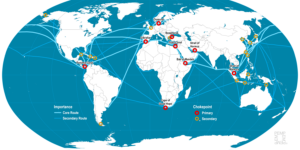
Red Sea and Suez Canal disruptions have forced carriers to reroute around the Cape of Good Hope, adding up to two weeks to transit times while increasing fuel costs and schedule instability.
South China Sea tensions continue to introduce volatility into one of Australia’s most critical trade corridors, impacting insurance pricing and carrier reliability.
Port congestion and industrial action create ripple effects that can delay supply chains for months, even when the initial disruption lasts only days.
The reality is simple: disruption will happen. The real question is whether your supply chain sees it early enough to respond.
And this is where most exporters are exposed – not by disruption itself, but by a lack of visibility.
Many exporters believe they have visibility because they receive tracking updates. In reality, they are operating inside what we call the visibility gap – a situation where businesses are data-rich but insight-poor.
This gap appears in three critical ways:
1. The Status Gap
Knowing where a shipment is located does not explain why it is delayed or what the commercial impact will be. “At port” is not intelligence – it is a placeholder.
2. The Silo Gap
Information exists across multiple systems – customs data, warehouse inventory, carrier updates – but without integration there is no single version of truth. Decision-making becomes reactive and fragmented.
3. The Latency Gap
Information arrives too late to act. By the time a disruption is confirmed, the window to reroute or mitigate cost may already be gone.
At BRi, we address this through PATHWAY – our proprietary platform designed to transform fragmented logistics data into real-time commercial insight. The goal isn’t reporting what happened yesterday. It’s enabling decisions that shape tomorrow.
Where Australian Exporters Are Most Exposed
Even experienced exporters often fall into predictable risk traps:
The Concentration Trap
Over-reliance on a single market, carrier, or gateway creates efficiency – until it becomes a single point of failure. Diversification is no longer optional; it is a strategic necessity.
Fragmented Accountability
Multiple providers across different legs of the journey often lead to blurred responsibility. When problems arise, exporters are left chasing answers instead of executing solutions. True resilience comes from having a partner who owns outcomes end-to-end.
The Data Vacuum
Lagging information forces reactive decision-making. Without real-time insight, exporters are constantly managing yesterday’s problems instead of anticipating tomorrow’s risks.
If the first time you hear about a disruption is when your customer asks where their shipment is, the damage has already begun.
What Effective Export Risk Management Actually Looks Like
Risk management today is proactive, not defensive.
It requires a shift from transactional logistics toward strategic partnership built around three pillars:
Foresight over reporting – early signals that allow leaders to weigh commercial trade-offs before disruption escalates.
Accountability through redundancy – alternative routes and strategies already mapped and ready to activate.
Commercial scenario planning – stress-testing routes against real-time industry conditions, from port health to geopolitical risk.
The goal isn’t eliminating risk. It’s controlling how risk affects your business outcomes.

How to Stress-Test Your Export Strategy
If you want to understand whether your export model is built for modern volatility, ask yourself:
Do we have a single real-time view of our cargo across all legs of the journey?
If a major gateway closed tomorrow, could we pivot within days – and do we understand the true cost of doing so?
Is our data helping us predict outcomes, or simply documenting delays after they occur?
These questions often reveal gaps that traditional logistics models were never designed to address.

Why Partnership Matters More Than Ever

In a volatile environment, the most valuable asset an exporter can have is a logistics partner who thinks commercially, not just operationally.
This isn’t about moving faster for the sake of speed. It’s about calm execution, strategic foresight, and clear accountability.
When logistics becomes an integrated extension of your business, complexity stops being a threat and becomes a manageable variable.
As you look toward the next quarter, consider this:
Is your export strategy built for the world as it used to be – or the world as it actually operates today?
Because in an environment defined by uncertainty, certainty becomes the ultimate competitive advantage.